Plastic Dreams: the story of the record
Eleven minutes, no breakdown, no vocal and a producer nobody had heard of. "Plastic Dreams" opens with a deep gong, rolls into a loose, jazzy organ line and simply keeps going. A Dutch radio DJ made it in one night in 1992, it went to number one on Billboard's dance chart in 1993, and DJs still reach for it when a night needs a lift. Here is how it came about.
At a glance
| Artist | Jaydee (Robin Albers) |
|---|---|
| First release | 1992, R&S Records, Belgium, RS 92027 |
| Length | About 11 minutes, radio edit about 3 minutes |
| Gear | Atari computer, Yamaha TX81Z sound module for the organ |
| US release | 1993, Epic |
| Charts | No. 1 Billboard Hot Dance Music/Club Play (July 1993), No. 18 UK (1997 reissue) |
| Sampled by | Armand Van Helden, "You Don't Know Me" (UK No. 1, 1999) |
| Accolade | Best single of 1993 in Robert Christgau's Pazz & Jop Dean's List |
Robin Albers: the radio DJ behind Jaydee
Jaydee is Robin Albers from the Netherlands. He joined AVRO's Radio 3 as a DJ in 1984, and in 1990 he launched "For Those Who Like To Groove", the first show on Dutch radio dedicated to house music (This Is Our House interview, reprinted by Marcy Goes Wild). At the weekends he played the clubs.
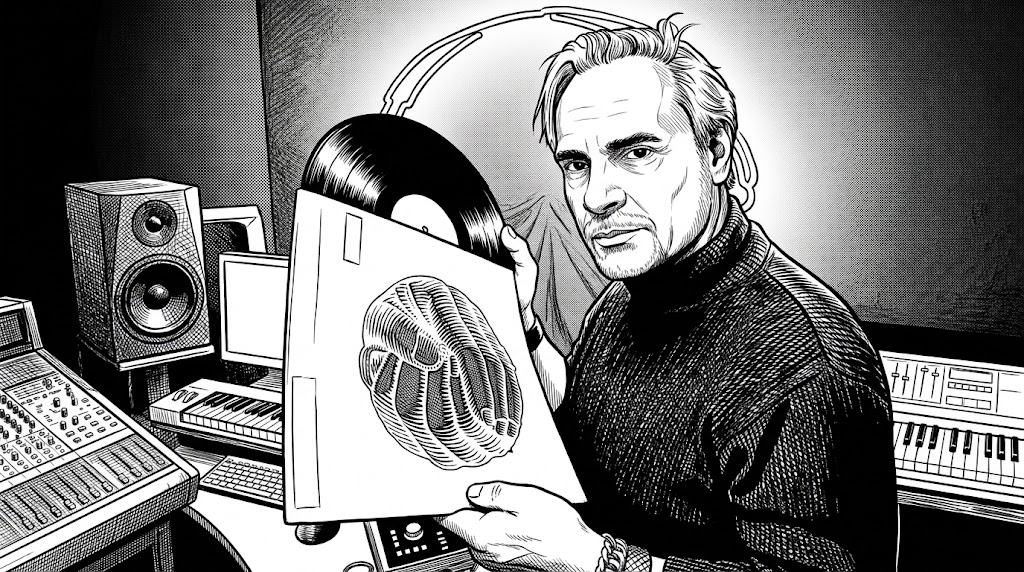
Around that time he took piano lessons. DJ Sven, known for the "Holiday Rap", helped him set up an Atari computer with 8 MB of memory, "which was quite a lot back then", as Albers remembers in a video interview with Muzikxpress. About a year into the lessons he made "Plastic Dreams". It was his first release.
One night in August
The track was born after an August evening on a balcony with a friend. Afterwards Albers went into his studio alone and kept playing (VICE, 2016). He deliberately did not lock every note to the grid, and the small timing mistakes turned into the funky push that carries the groove. He could never play it the same way again.
Most people hear a Hammond organ in "Plastic Dreams". It isn't one. In the Muzikxpress interview Albers points at a small Yamaha TX81Z, an FM sound module from the late 1980s: the organ comes from that box. He still has it, and says he will never sell it.
Six Sundays at Goldfinger
Before anyone else heard the track, Albers tested it in the club. He had a weekly Sunday afternoon slot at Goldfinger in Rosmalen, squeezed between two gabber DJs. For six weeks he played the eleven-minute version, stood on the dancefloor and went home to adjust the hi-hat and the clap (VICE Netherlands, 2015).
The industry was less convinced. Orlando Voorn of Format #1 liked it but doubted anybody would release it. Frits van Swoll of Dureco asked for a break in the middle, and Albers refused. Sony and CBS passed as well.
A platinum card
The title comes from his girlfriend at the time, a flight attendant. On one flight a business class passenger, Donald Trump, paid for champagne and duty free with a platinum credit card, then still a rarity. She showed the card to the pilot, who was so impressed that the plane gave a small jolt. Albers kept wondering how a piece of plastic could make such an impression on anyone (Insomniac, 2017).
The gong in Frank De Wulf's car
The breakthrough came through a compilation. Peter Boertje was putting together the CD "Natural Elements" and had three minutes left, so his team cut "Plastic Dreams" down to fit. That edit became the radio version most people know, and Albers has never been fond of it.
The Belgian producer Frank De Wulf played the CD in his car, with R&S boss Renaat Vandepapeliere in the passenger seat. Renaat skipped through track after track and liked none of them. They had reached the restaurant and Frank was about to switch off the engine when the gong of "Plastic Dreams" came on. Renaat listened, asked who this was, and said it was great, Albers tells Muzikxpress. A week later a fax from R&S asked for a worldwide release.
When Albers later visited the label in Ghent, the office was stacked to the ceiling with boxes. All of them held copies of "Plastic Dreams", by his account between 50,000 and 100,000, and they were gone within a week. At home his floor was covered in metres of fax paper: chart positions, booking requests from Russia, Greece and Finland. In 1993 he became the first Dutch DJ to play Moscow.
In the US, Epic picked the record up. In July 1993 it topped Billboard's Hot Dance Music/Club Play chart, and Robert Christgau put it first among the singles in his Pazz & Jop Dean's List for 1993. In the UK it only entered the main chart with a 1997 reissue on R&S, reaching number 18. Albers puts physical sales over the years at around 1.8 million copies, plus appearances on at least 2,000 compilations.
Why it never left the bag
The gong became one of the clearest signals in dance music: when it sounds, people head for the floor. Through the rest of the 1990s "Plastic Dreams" competed with Orbital's "Chime" as the record for midnight on New Year's Eve (Insomniac).
Every generation of DJs has had a go at it. The Discogs master lists remixes by David Morales, Murk, Peshay and Boom Boom Satellites in 1997, Switch in 2006, Audion in 2008, Shadow Child in 2016 and Nicole Moudaber in 2019. Albers rebuilt it himself twice, in 1996 and 2003. Still, most DJs come back to the original eleven minutes.
The drums travelled further than the record itself. Armand Van Helden took them from Angel Moraes' 1997 remix, "Plastic Dreams 97 (Angel's Dream)", and built "You Don't Know Me" on top of them, with strings from Carrie Lucas (WhoSampled). In February 1999 that track went to number one in the UK, so millions heard the "Plastic Dreams" drums without ever knowing the name.
In 2024 the Metropole Orkest played it with dancers as part of Amsterdam's 750th anniversary celebrations (Mick Boskamp). Albers is still behind the decks: at Amsterdam Dance Event in October 2026 he was on the House Legends line-up. Records like this turn up every month in the "Still in the bag" corner of our chart, and the Classics page collects their stories.
Questions
Who made "Plastic Dreams"?
Jaydee, the alias of the Dutch radio and club DJ Robin Albers. It was his first release, in 1992 on R&S Records.
Is the organ in "Plastic Dreams" a Hammond?
No. Albers says the organ sound comes from a Yamaha TX81Z, a small FM sound module he still owns.
Why is it called "Plastic Dreams"?
The name goes back to a platinum credit card that impressed a pilot so much the plane jolted, a story Albers heard from his girlfriend, a flight attendant.
How long is "Plastic Dreams"?
The original runs about eleven minutes without a break. The three-minute radio edit was made for a compilation CD.
Which hit samples "Plastic Dreams"?
Armand Van Helden's "You Don't Know Me" uses the drums from Angel Moraes' 1997 remix. It went to number one in the UK in February 1999.